Looking for Custom Industrial FRP & Dual Laminate Engineering?
Troy Dualam engineers and manufactures custom fiberglass-reinforced plastic (FRP) and thermoplastic-lined Dualam composite systems for chemical, industrial, and water infrastructure. Explore our technical capabilities on the FRP Engineering page or contact our engineering team.
Fiber-Reinforced Plastic (FRP) is a composite material. It has been gaining popularity in various industrial applications due to its corrosion resistance, lightweight, exceptional strength, durability, and versatility. It is made by combining a polymer matrix with reinforcing fibers in a multi-step manufacturing process.
In this article, we will delve into the manufacturing process of fiber-reinforced plastic and how each step contributes to the final product’s quality and performance.
The Manufacturing Process of Fiber-Reinforced Plastic
1. Fiber Selection:
The manufacturing process begins with the careful selection of reinforcing fibers. Glass fibers are the most commonly used due to their affordability, high tensile strength, and good electrical insulating properties. Carbon fibers, aramid fibers (such as Kevlar), and basalt fibers can also be used depending on specific application requirements.
2. Resin Selection:
The matrix material holds the fibers together and transfers loads between them. It is chosen based on the desired mechanical properties and chemical resistance of the final FRP product. Thermosetting resins like epoxy, polyester, and vinyl ester are widely used, each offering unique characteristics. For instance, vinyl ester resins provide excellent corrosion resistance, making them suitable for marine and chemical processing environments.
3. Mold Preparation:
The mold defines the shape and surface finish of the FRP product. It is crucial to prepare the mold properly to ensure the final product meets the design specifications. Mold release agents are applied to prevent the resin from adhering to the mold surface, allowing for easy demolding.
4. Layering and Impregnation:
In this step, the reinforcing fibers are placed into the mold, and the resin is applied. The fibers can be in the form of woven fabrics, continuous strands, or chopped strands, depending on the manufacturing method and the desired strength orientation. The resin is evenly distributed to saturate the fibers, ensuring a strong bond between the components.
5. Curing:
Curing is a critical phase in which the resin undergoes a chemical reaction, transforming from a liquid to a solid state. This reaction is often accelerated by heat, catalysts, or UV light. Proper curing ensures the FRP product achieves its full mechanical strength, chemical resistance, and dimensional stability.
6. Demolding and Finishing:
Once the curing process is complete, the FRP component is removed from the mold. Excess material is trimmed, and additional finishing processes, such as sanding, machining, or coating, may be performed to achieve the final dimensions and aesthetic requirements.
Common FRP Fabrication Methods
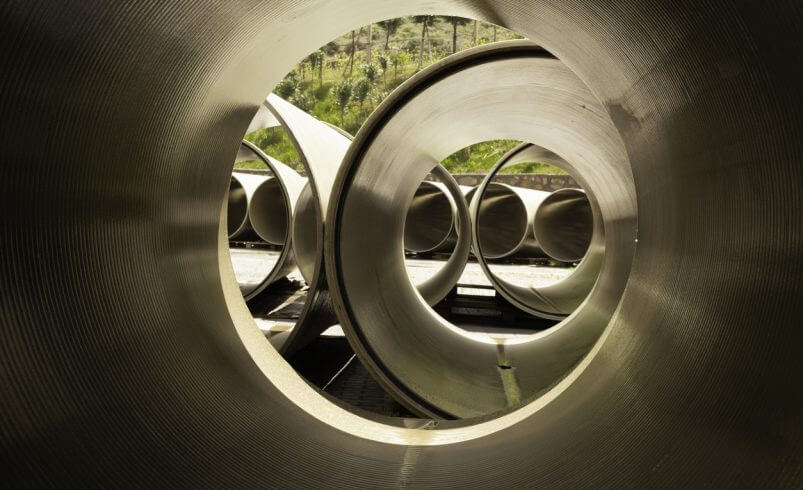
Several fabrication techniques are employed in the industry, including hand lay-up for custom shapes, spray-up for large surfaces, filament winding for high-strength cylindrical structures like pipes and tanks, and pultrusion for continuous profile shapes.
Engineering Excellence at Troy Dualam
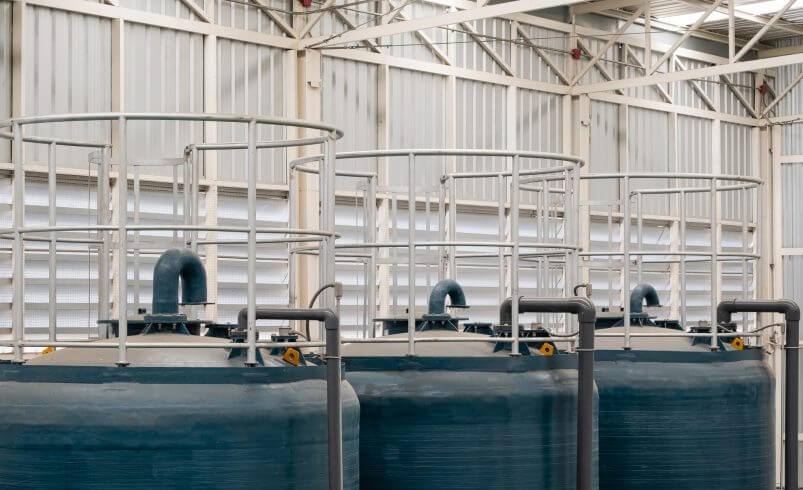
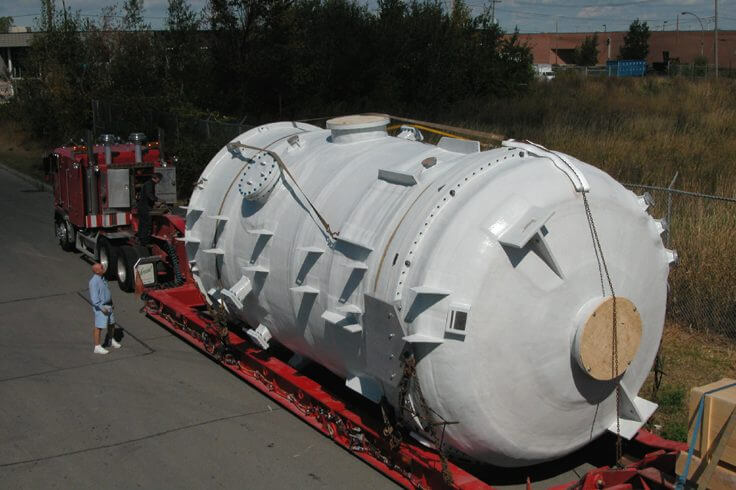
At Troy Dualam Inc., custom composite manufacturing is guided by rigorous engineering and ASME RTP-1 certified fabrication standards. Whether you need custom chemical storage vessels, high-integrity piping spools, or industrial scrubbers, our team engineers solutions tailored to your operating environment.
Explore our custom FRP engineering capabilities or contact our engineering team at Troy Dualam Inc. to discuss your specifications.